Turning Satellite Data Into Smarter Grazing Decisions: Cibo Labs at Clear Creek by Elders
Thanks to Elders for sharing this amazing case study on the AFM and PastureKey with Cibo Labs.
3 min read
|
“AFM has transformed how I manage pasture. What used to take 50 days a year now takes five.” - Darryn Browne, Browne Livestock, Mogumber WA |
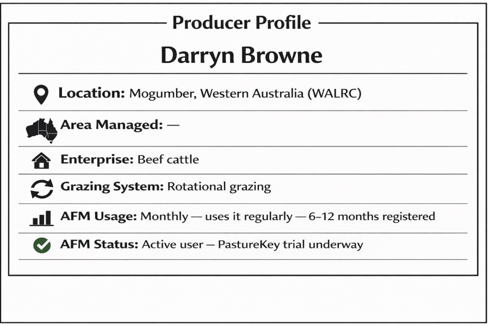
Beef cattle production in Western Australia’s northern wheatbelt demands a serious commitment to pasture monitoring. The country around Mogumber, rolling terrain with variable seasonal rainfall, can look deceptively well-grassed until you’re in trouble. For Darryn Browne at Browne Livestock, staying ahead of feed availability has always required substantial investment in on-ground assessment.
Before AFM, that investment was measured in days. Darryn was spending around 50 days a year on pasture assessments, a combination of rising plate meter work, physical quadrat sampling, and satellite-assisted ground estimates. It was thorough, but it was also time-consuming work that pulled him away from everything else the operation demanded.
His three biggest challenges reflect the reality of grazing in a variable climate: not knowing actual biomass accurately, the sheer time required for on-ground assessment, and the difficulty of predicting seasonal growth before conditions turn. All three pointed to the same underlying problem: too much time spent gathering information, not enough time acting on it.
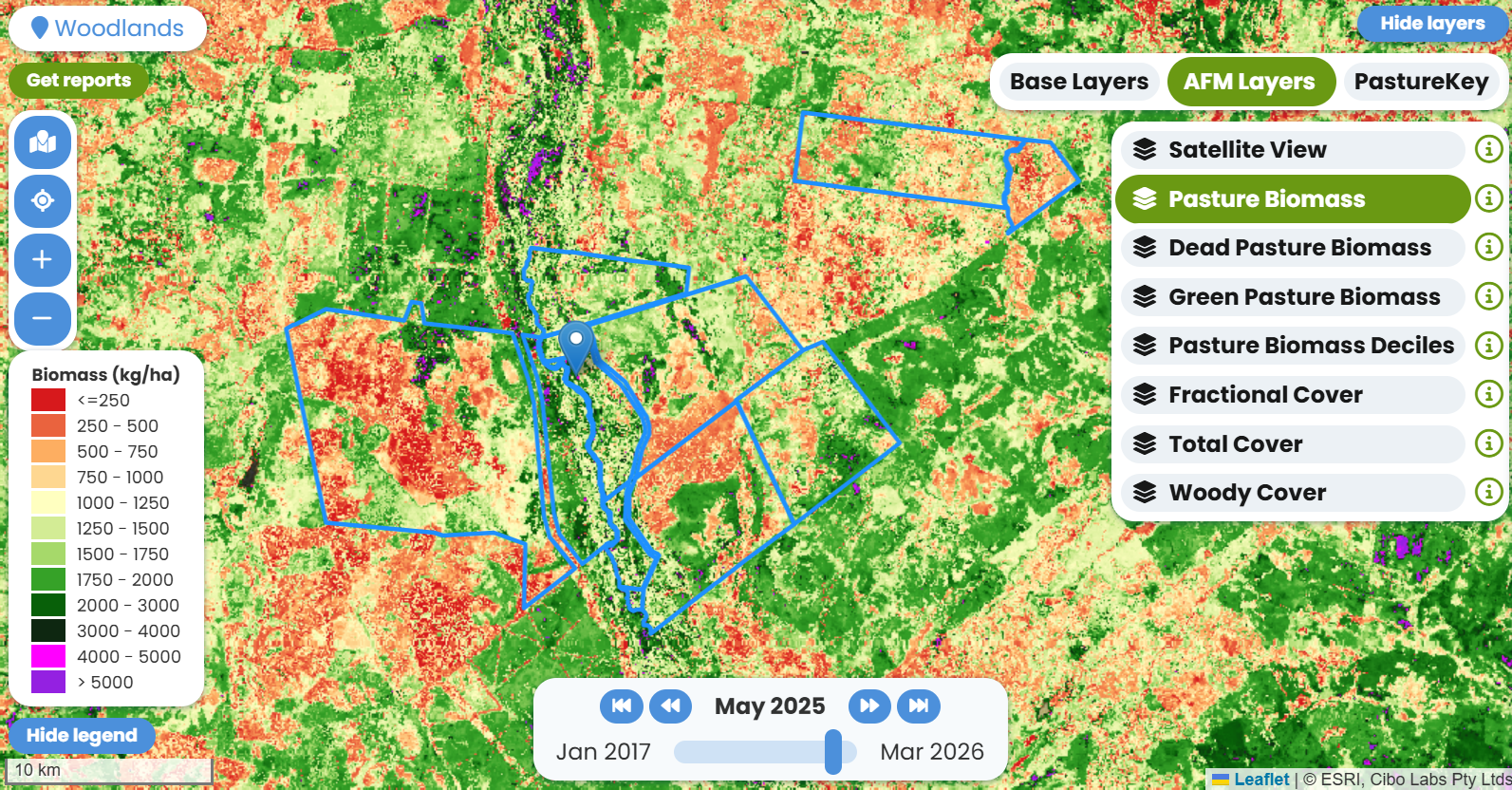
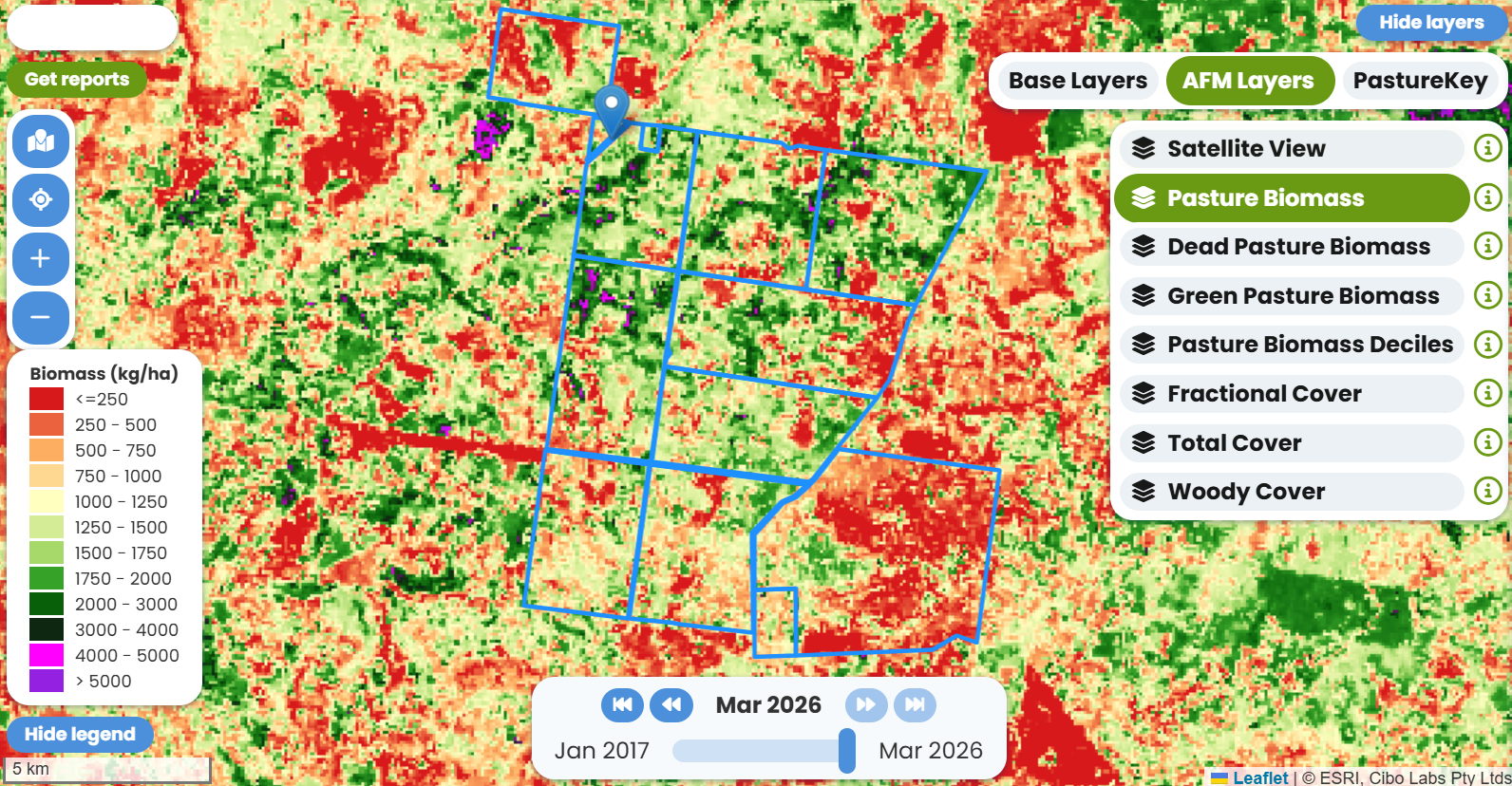
Darryn registered with AFM within the past year and adopted it quickly into his monthly routine. The free access through MLA removed any barrier to getting started, and the immediate utility of the farm-level biomass map, being able to see feed status across the property without setting foot in a paddock, was apparent from early on.
He verifies the satellite data against his own visual assessments and notes that AFM varies in accuracy, sometimes reading a little high, sometimes a little low. That honest calibration sits alongside a clear verdict: the tool has delivered significant savings, and he uses it regularly without anything holding him back.
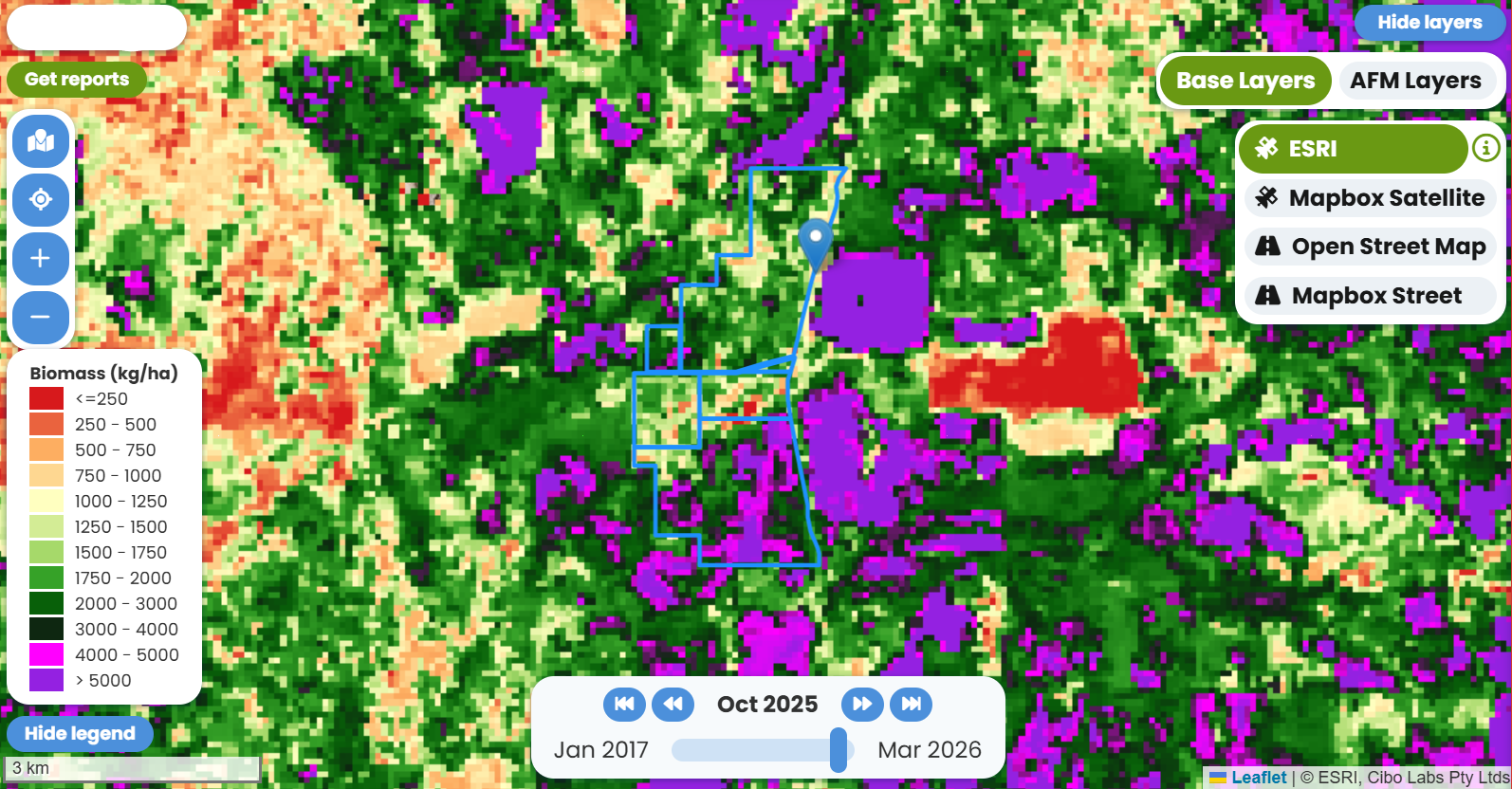
Within months of getting started, Darryn had also begun trialling PastureKey for paddock-level resolution, and rates himself as definitely interested in subscribing. The trajectory from free AFM user to engaged PastureKey trialler in under a year reflects just how quickly the tool embedded itself into how he runs the operation.
50 Days Down to 5
The headline number from Darryn’s experience is stark. Fifty days a year on pasture assessment is a significant operational cost, in time, in labour, in opportunity cost. With AFM, that figure has dropped to five days.
|
BEFORE AFM 50 days per year on pasture assessment |
WITH AFM 5 days per year on pasture assessment |
That 90% reduction doesn’t mean Darryn has stopped engaging with his pastures. He still walks paddocks and verifies what the satellite is telling him. But AFM has shifted the balance dramatically: less time gathering data, more time using it. The platform has effectively replaced the most time-intensive components of his previous monitoring approach, plate meter work, quadrat sampling, while maintaining the ground-truth checks that keep him confident in the data.
A Monthly Discipline Across the Full Decision Cycle
Darryn’s usage pattern reflects how thoroughly AFM has been woven into his management calendar. Nothing prevents him from using it more often, he simply uses it on a regular monthly schedule, triggered by exactly the moments when pasture data matters most: before planning stocking rates and grazing rotations, before making pasture management decisions, during drought or feed shortages, and when planning for the season ahead.
That coverage across the full decision cycle, from routine planning through to emergency feed management, means AFM is doing genuine work at every stage, not just as a nice-to-have check-in.
Built for What Comes Next
The features Darryn wants from AFM point directly to the next stage of his operation’s digital development: paddock-level data, a mobile app for in-field use, email and SMS alerts when pasture hits key thresholds, and integration with other farm management software. He’s already trialling PastureKey to get the paddock-level resolution, and his interest in alerts and integration suggests a producer ready to build a genuinely data-driven grazing system.
The free AFM platform got him there. Having experienced the value of satellite-derived pasture data at the farm level, the appetite for more is clear.
Darryn’s story is the clearest expression in this evaluation of what AFM can do for a producer who commits to it. Fifty days of pasture assessment work reduced to five is not a marginal efficiency gain, it is a fundamental change in how the operation runs. Time that was once spent gathering information is now available for decisions, for management, for everything else a beef operation demands.
His recommendation to other producers is unqualified, and his rapid progression from first-time AFM user to active PastureKey trialler within a single year reflects what happens when a tool delivers on its promise quickly.
|
“AFM has transformed how I manage pasture. What used to take 50 days a year now takes five.” - Darryn Browne, Browne Livestock, Mogumber WA |
|
“AFM has transformed how I manage pasture. What used to take 50 days a year now takes five. I use it regularly - before planning rotations, during dry spells, when I’m looking ahead at the season. It’s become central to how I run the operation.” - Darryn Browne, Browne Livestock, Mogumber WA |
Thanks to Elders for sharing this amazing case study on the AFM and PastureKey with Cibo Labs.
"I think having access to the satellite mapping gives us a lot more confidence in our decisions. You’re less likely to get caught out if you’re...