Have You Started Preparing for Spring?
Spring is getting closer, and for many producers, preparations are already underway.
3 min read
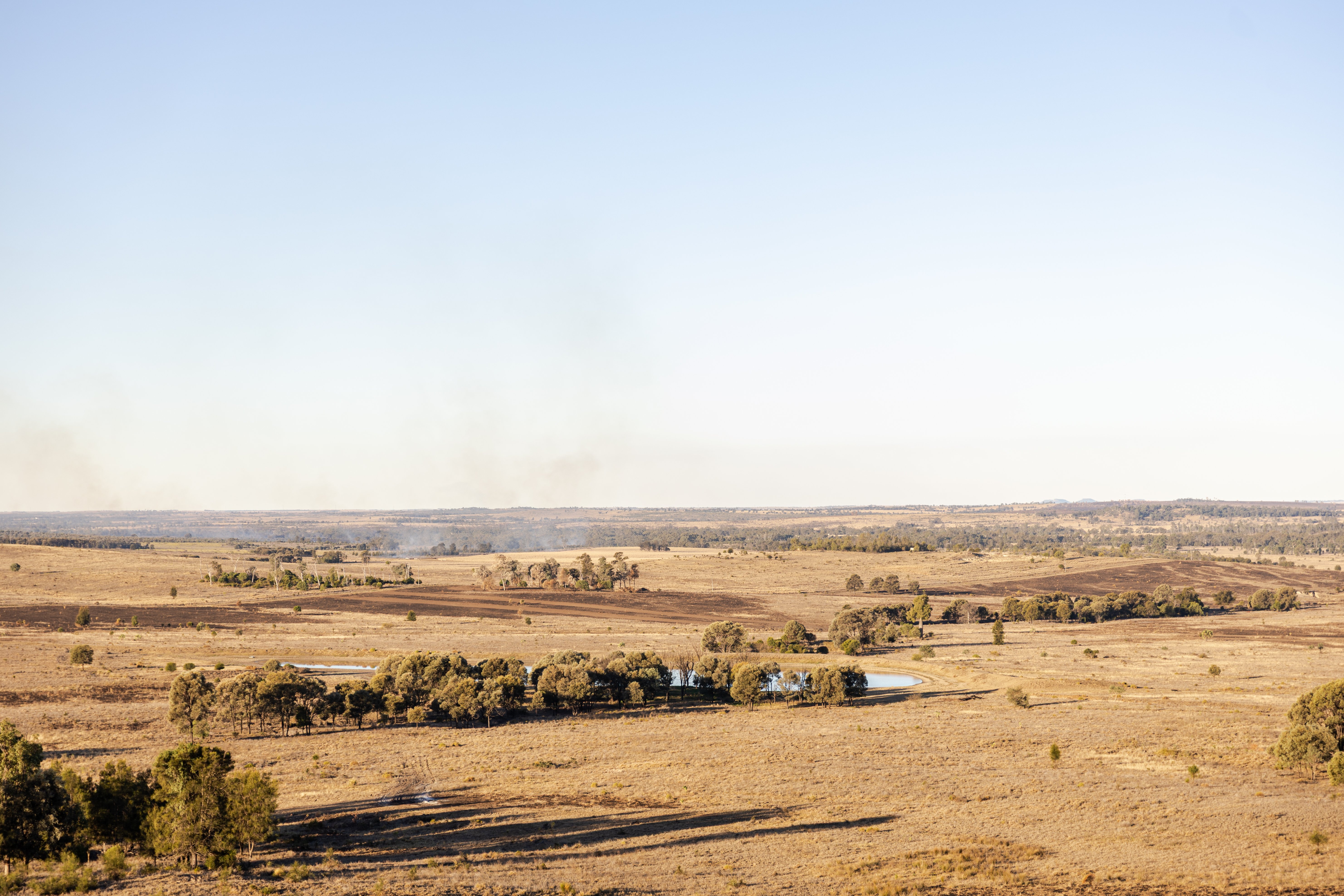
When it comes to pasture management, it’s easy to focus on a single number.
A feed estimate. A rainfall total. A pasture biomass figure.
And while those numbers are useful, they rarely tell the full story on their own.
Because grazing decisions are rarely based on one factor alone.
A paddock might appear to have plenty of feed available, but how evenly is it distributed? Is the pasture actively growing, or is it mostly dry material? How does it compare to previous months or seasons? Is recovery slowing after grazing? Are conditions consistent across the whole property, or are some areas declining faster than others?
These are the questions that matter when making practical, on-ground decisions.
That’s why at Cibo Labs, we often say: one number isn’t enough.
Metrics like Total Standing Dry Matter (TSDM) are valuable because they provide an objective estimate of how much pasture is available in a paddock. They help remove some of the guesswork from grazing management and create a more consistent way to monitor feed availability over time.
But a single TSDM figure only captures one part of the picture.
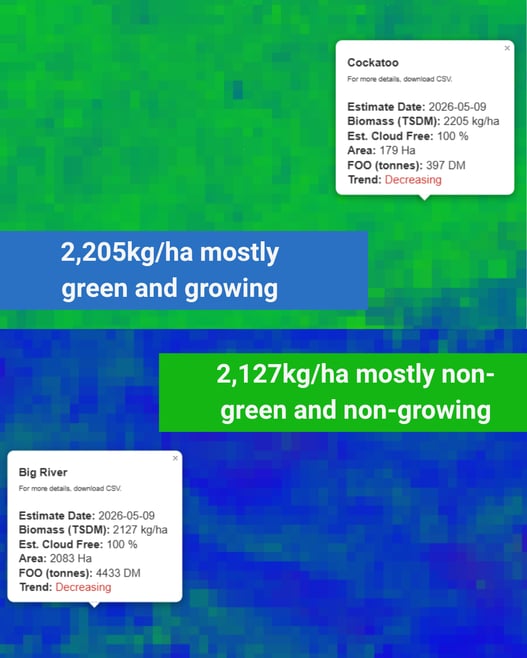
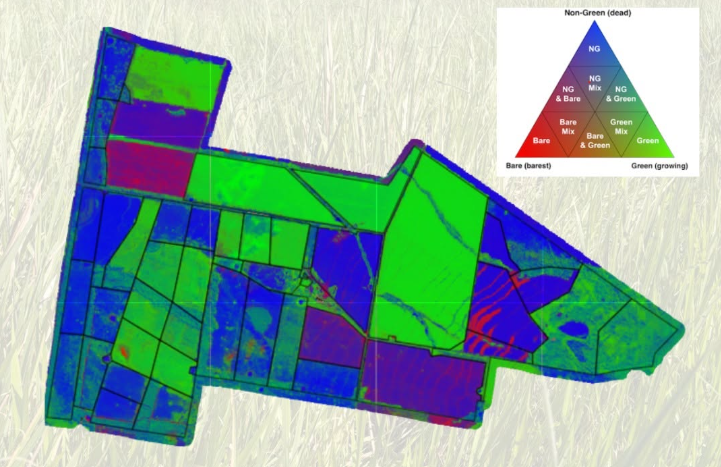
Take the example below. One paddock is sitting at 2205kg/ha and is mostly green, active and growing. Another is sitting at 2127kg/ha, but is largely made up of non-growing, non-green material.
On paper, the TSDM figures look very similar.
But the Fractional Cover imagery tells a very different story.
One paddock is still actively producing quality feed, while the other may be much closer to requiring management intervention.
Without the additional imagery, those differences can easily be missed.
Satellite-derived pasture monitoring is most powerful when multiple layers of information are used together, rather than in isolation.
By combining imagery and historical data, producers can better understand:
This broader view helps move decision-making from reactive to proactive.
Instead of waiting until feed shortages become obvious from the ute window, producers can identify subtle shifts earlier and respond before conditions tighten.
For example, increasing variability across a paddock may indicate grazing pressure is becoming uneven. Declining green biomass may suggest growth is slowing earlier than expected. Historical trend layers can show whether current conditions are tracking above or below normal for that time of year.
Individually, each layer provides useful context.
Together, they create a much clearer picture of what is actually happening across the farm.
On-ground observation will always play an important role in grazing management. Producer knowledge and experience are invaluable.
But even the most experienced operators can only physically inspect so much country, especially across large or remote properties.
Conditions also change gradually. Often, the warning signs appear long before they become visually obvious.
By the time pasture decline is noticeable from a quick paddock inspection, some management opportunities may already have been lost.
Satellite monitoring provides a consistent, property-wide view that helps support and strengthen on-ground observations.
Instead of relying purely on snapshots in time, producers can monitor trends, compare paddocks and track changes more objectively across the entire operation.
And importantly, this can all be done without needing to drive every paddock.
The goal of pasture monitoring isn’t simply collecting more data.
It’s improving confidence in day-to-day decisions.
When producers can see the full picture, they’re better equipped to:
Good grazing management isn’t about reacting once feed runs short.
It’s about understanding where conditions are heading next.
That’s why combining multiple layers of imagery and data matters so much.
Because one number on its own can only tell part of the story.
With the Australian Feedbase Monitor (AFM) and PastureKey, producers can access multiple layers of satellite-derived pasture insights through the Cibo Labs Dashboard.
From broad property-level benchmarking with AFM to detailed paddock-level insights in PastureKey, producers can explore more than just a single feed estimate.
By bringing together biomass, ground cover, Fractional Cover imagery, historical trends and variability layers, the platform helps create a more complete understanding of pasture conditions across the operation.
Because better decisions come from seeing the full picture — not just one number.
👉 Start your free trial today and explore your feedbase from every angle with Cibo Labs.
Spring is getting closer, and for many producers, preparations are already underway.
Every producer has paddocks they consider their best performers.
We all know the importance of keeping an eye on pasture. But by the time a change is obvious from the ute window or during a paddock inspection, it...