What Your Best Paddocks Can Teach You
Every producer has paddocks they consider their best performers.
Maybe they always seem to carry more feed, recover quickly after grazing or consistently support stock through tougher seasons. Over time, you build a strong understanding of your country through experience, observation and years of management.
But when was the last time you compared every paddock across your property using the same objective measure?
While nothing replaces local knowledge, having a consistent view across your entire property can reveal patterns that are difficult to spot from the ground alone.
No matter how well you know your property, it's impossible to be everywhere at once.
Paddocks respond differently to rainfall, soil type, grazing pressure, aspect and management history. Some recover quickly after grazing, while others take longer. Some perform consistently year after year, while others fluctuate depending on seasonal conditions.
The challenge isn't knowing your country, it's having an easy way to compare every paddock objectively over time.
That's where paddock-level satellite monitoring can provide valuable additional insight.
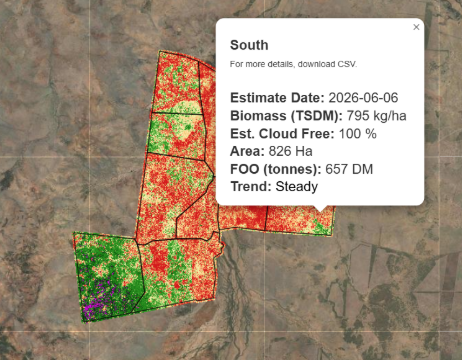
PastureKey combines satellite imagery with advanced modelling to provide paddock-level information at 10-metre resolution.
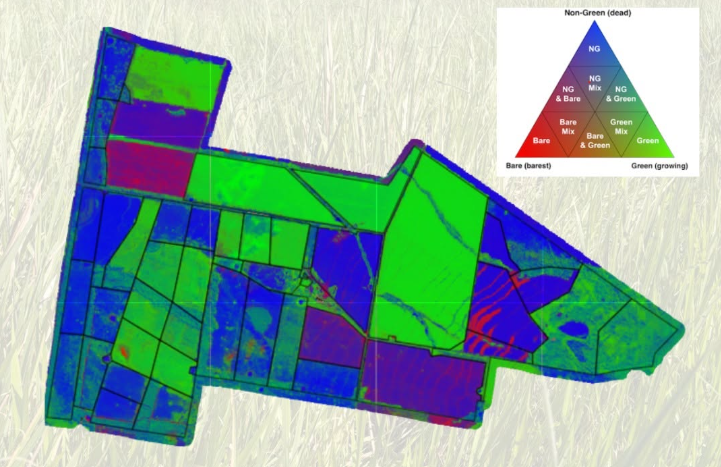
Rather than looking at your property as one average, you can compare individual paddocks and understand how each one is performing.
This makes it easier to identify:
Instead of relying on memory or occasional inspections, you have consistent information that helps build a clearer picture over time.
When we think about monitoring pasture, it's easy to focus on identifying issues.
But some of the most valuable insights come from understanding success.
Why does one paddock consistently recover faster after grazing?
Why does another maintain green feed longer into the dry season?
What management decisions, soil characteristics or seasonal responses are contributing to those differences?
Answering these questions can help you apply successful management practices across more of your property, rather than simply responding when something goes wrong.
Every paddock tells a slightly different story.
When you combine paddock-level comparisons with biomass estimates, Fractional Cover, pasture growth trends and historical imagery, those individual stories come together to provide a more complete understanding of your feedbase.
Rather than making decisions based on a single paddock visit, you have objective information that complements your own experience and helps build confidence in your grazing decisions.
Good grazing management starts with understanding what's happening across your entire property, not just the paddocks you've visited recently.
By combining decades of local knowledge with objective, paddock-level satellite data, you can make more informed decisions, identify opportunities sooner and better understand why some paddocks consistently outperform others.
Start your free PastureKey trial today and discover how paddock-level insights can help you get even more from the country you already know.
Every producer has paddocks they consider their best performers.
We all know the importance of keeping an eye on pasture. But by the time a change is obvious from the ute window or during a paddock inspection, it...
When it comes to pasture management, it’s easy to focus on a single number.